Where Does the Word Coffee Come From? The Etymology of Coffee
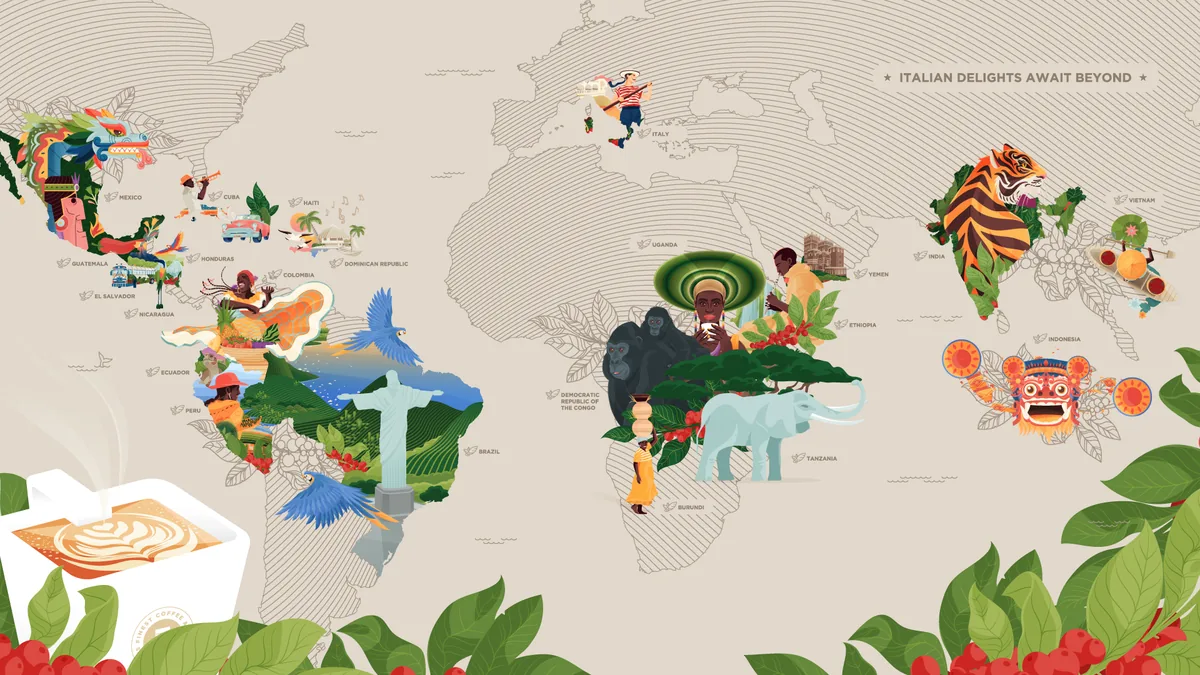
You probably say it before you are fully awake: coffee. But where does the word coffee come from? The short answer is Arabic. The longer answer is a 500-year journey through Yemen, Istanbul, Venice and Amsterdam, and every stop left a mark on the word you use today.
The short answer: coffee comes from the Arabic word qahwa
Most linguists trace the word coffee to the Arabic qahwa (قهوة). From Arabic it passed into Ottoman Turkish as kahve, then into Italian as caffè and Dutch as koffie. English borrowed it at the end of the 1500s, most likely through Dutch and Italian traders, and the spelling eventually settled on coffee.
What does qahwa mean?
Before it named a drink made from coffee beans, qahwa was an older Arabic word that classical dictionaries connect with wine. Many scholars believe the root carried a sense of something that dulls or reduces an appetite, which is one reason the name moved so easily to a drink people used to stay alert and skip a meal.
By the 15th century, Sufi communities in Yemen were drinking coffee to stay awake through night-time devotions, and the name qahwa travelled with the drink as it spread to Mecca, Cairo and beyond.
Did coffee get its name from Kaffa, Ethiopia?
You will often read that coffee is named after Kaffa, a region in southwestern Ethiopia where coffee plants grow wild. It is a nice story, and Ethiopia is widely considered the birthplace of the coffee plant. But most language experts favor the Arabic qahwa as the source of the word, with the Kaffa connection treated as a possible but unproven link.
From qahwa to kahve: the Ottoman chapter
When coffee reached the Ottoman Empire in the 1500s, qahwa became kahve in Turkish. Istanbul's coffeehouses turned the drink into a social ritual: a place to talk, play games, listen to stories and trade news. That culture, and the word kahve, is what European merchants carried home.
How Europe made the word its own
Coffee arrived in Europe through trading ports such as Venice in the late 1500s and 1600s. Each language adapted the Turkish word:
- Italian: caffè
- French: café
- Spanish and Portuguese: café
- German: Kaffee
- Dutch: koffie
- English: coffee
Italy's caffè matters more than most. Italian coffee culture gave the world espresso, cappuccino and the neighborhood bar where coffee is a quick, daily ritual, and it is the tradition Qargo Coffee is built on.
Coffee vs. café: why one word means the drink and the place
In French, café means both the drink and the place that serves it. English borrowed café in the 1800s to describe a coffeehouse or small restaurant, while keeping coffee for the drink itself. That is why you order a coffee at a café.
The word for coffee around the world
- Arabic: qahwa
- Turkish: kahve
- Greek: kafés
- Russian: kofe
- Swahili: kahawa
- Japanese: kōhī
Almost every one of them still echoes the original Arabic sound.
Frequently asked questions
Is coffee an Arabic word?
Yes. Coffee comes from the Arabic qahwa, by way of Turkish kahve and European languages such as Italian and Dutch.
What does qahwa mean in English?
Today qahwa simply means coffee. Historically it was an older Arabic word linked to wine and to something that curbs the appetite.
Where does the word café come from?
Café is the French form of the same word, taken from Italian caffè and Turkish kahve. English uses it for the place rather than the drink.
When did the word coffee enter English?
It first shows up in English writing at the end of the 16th century, with many early spellings before coffee became standard.
Taste the Italian side of the story
The word took centuries to reach your cup. Getting the coffee there should take a few minutes. Explore the Qargo Coffee menu, read about our partnership with Kimbo, one of Naples' legendary roasters, or find a Qargo Coffee near you.
Curious about other coffee history? Read the history of latte art or what makes cold brew different.